Disclaimer:
This page is not medical advice.
It’s one woman’s real-life breakdown of labs, scans, pathology reports, and treatment decisions — explained in plain English, with zero sugarcoating and occasional colorful language.
If medical details make you woozy, you might want to grab a snack… or head back to My Badass Battle instead.
Why This Page Exists
When I was diagnosed, I Googled everything.
I wanted facts, not fluff.
Numbers, not platitudes.
And explanations that didn’t feel like they were written for a medical textbook or a liability waiver.
This page is for:
- The newly diagnosed
- The “what does that mean?” crowd
- The partners, kids, friends, and coworkers trying to keep up
- And future-me, when chemo brain makes me forget what I already learned
These are the receipts.
All of them.
Diagnosis at a Glance
Diagnosis: Breast Cancer
- Type: Ductal Carcinoma In Situ (DCIS)
- Stage: Stage II
- Hormone Status:
- Estrogen Positive
- Progesterone Positive
- HER2 Negative
- Lymph Nodes Removed: 3
- Surgery: Double mastectomy with tissue expanders
- Treatment Plan: Surgery → Chemo → Radiation → Reconstruction → Long-term hormone therapy
How We Got Here (Timeline)
August 2025 — The “Well Shit” Mammogram
Routine boob squish.
Abnormal finding.
Immediate gut punch.
No one had to say it out loud — my body already knew.
Listen to your gut. It whispers before it screams.
September 2025 — Biopsy & Confirmation
Biopsy performed.
Results confirmed what I was afraid of — and worse, what I was prepared for.
This is where the language changed:
- From “spot”
- To “lesion”
- To “carcinoma”
Once you hear those words, life splits into before and after.
Hormones: Evicted
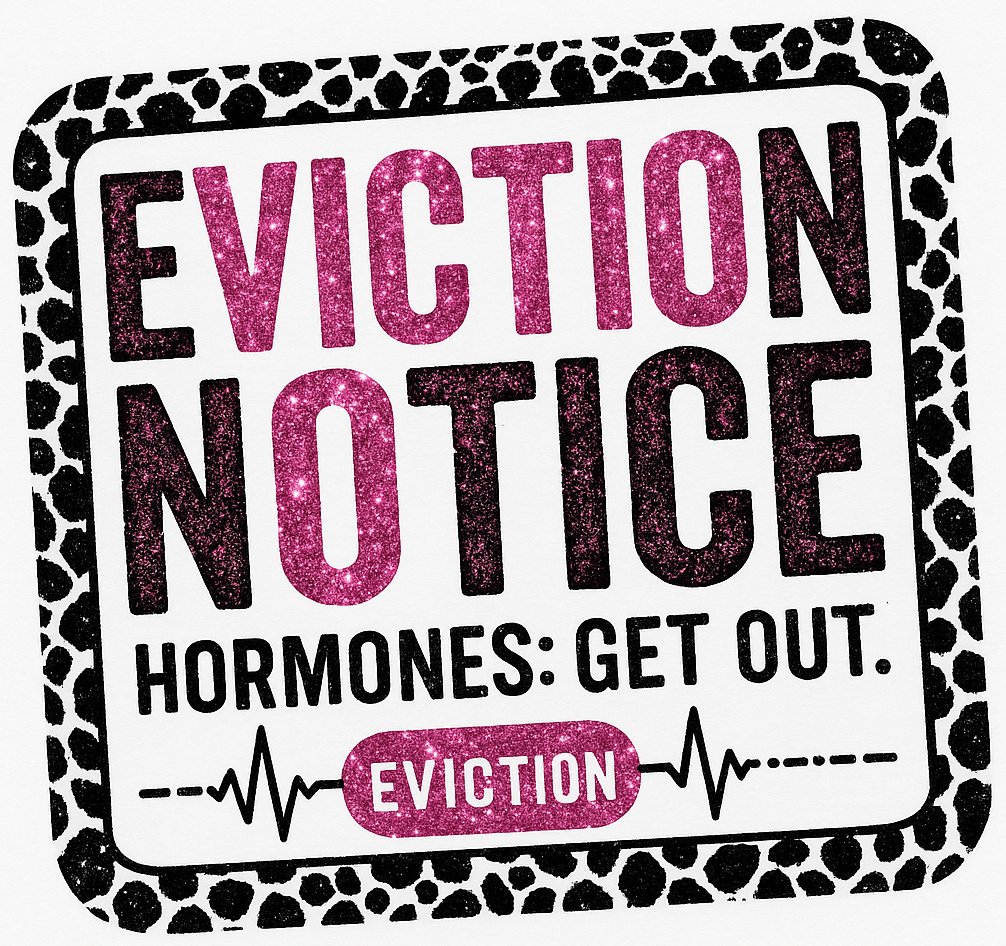
As soon as my diagnosis came in, the hormones had to go.
No taper.
No transition.
No farewell tour.
IUD removed immediately — because my cancer feeds on estrogen, and apparently, I had been unknowingly running an all-you-can-eat buffet for years.
Eviction notice served. Effective immediately.
Cue:
- Mood swings
- Tears for no reason
- Tears for every reason
- And the sudden realization that I now cry at commercials, wind, and sometimes fonts
This is why I say I have no hormones.
Not “low.”
None.
October 16, 2025 — Surgery Day
Double mastectomy.
Tissue expanders placed.
Three lymph nodes removed.
This was not cosmetic.
This was survival.
Compression bras.
Drains.
Packing material (yes, that floof).
And learning how to sleep like a museum exhibit.
Flat.
Smooth.
Most definitely not Jenny from the block.
Supportive Care & Medications
Chemotherapy Regimen — “TC” (aka The Toxic Cocktail)
Regimen Name: TC
(More formally: Docetaxel + Cyclophosphamide)
Referenced throughout daily posts — this is the technical breakdown.
This is the chemotherapy combination chosen for my specific cancer type, stage, and hormone status.
What TC Is
TC is a two-drug chemotherapy regimen commonly used in breast cancer treatment.
- T — Docetaxel (Taxotere):
A taxane chemotherapy drug that stops cancer cells from dividing by disrupting microtubules. - C — Cyclophosphamide:
An alkylating agent that damages cancer cell DNA so the cells can’t replicate.
Together, they are designed to aggressively target any remaining cancer cells after surgery.
Why TC Was Chosen
TC was selected based on:
- My cancer type and stage
- Hormone receptor status
- Lymph node involvement
- Overall treatment goals (curative, not palliative)
This is a finite course of chemotherapy with a defined number of cycles — not open-ended.
Common Side Effects (Real Talk)
TC is effective, but it does not come quietly.
Side effects may include:
- Nausea (sometimes sudden, sometimes relentless)
- Fatigue
- Hair loss (typically begins around days 17–19 after first infusion)
- Mouth sores
- Dry mouth
- Taste changes
- Fingernail loss (sometimes after treatment is completed)
- Fingertip and toe numbness that may or may not go away
- Bone pain (especially when combined with white blood cell growth shots)
- Gastrointestinal chaos (use your imagination)
Not everyone experiences all of these — but many of us get a sampler platter.
Support Meds That Come With TC
TC is not given alone. It comes with a supporting cast, including:
- Steroids (before and after chemo)
- Antiemetics (nausea control)
- Granix (tbo-filgrastim)
A white blood cell growth factor given days 3–7 after chemo to reduce infection risk
(see Granix section below for details)
Timeline Notes
- First infusion: 12/09
- Expected hair loss window: Days 17–19 post-infusion
- Side effects do not follow a neat schedule
- Chemo does not respect OCD timelines
Cancer loves to freelance.
💉 Granix (tbo-filgrastim) — aka The Shot That Keeps Me Alive
Granix is not a steroid.
It’s a leukocyte growth factor — a man-made protein that tells my bone marrow to get off its ass and make more white blood cells.
Why it matters:
- Chemotherapy can cause neutropenia (dangerously low white blood cells)
- Low white counts = high infection risk
- Granix helps shorten how long my immune system is knocked down
What it does:
- Stimulates the bone marrow to produce neutrophils
- Neutrophils are essential for fighting infection
- This is preventative, not optional
How it’s taken:
- Self-injection at home
- Days 3 through 7 after each chemo round
- Repeated after every cycle of chemotherapy
Side effects (the fine print they don’t sugarcoat):
- Bone pain (because bone marrow activity hurts — rude but effective)
What helps:
- Take Zyrtec + Tylenol about one hour before the injection
- This combo helps blunt the bone pain without interfering with treatment
Translation:
This shot sucks.
But it helps keep me out of the hospital, out of isolation, and alive enough to keep fighting.
Worth it.
Nerves, Sensation & Numbness After Mastectomy ← NEW
One of the least talked-about effects of a double mastectomy is loss of sensation across the chest, breast area, and armpits. This numbness is common, expected, and often permanent to some degree — even when surgery and reconstruction go “perfectly.”
Why nerves get cut
Breast sensation comes from sensory nerves that travel directly through the breast tissue and fatty tissue. During a mastectomy, that tissue is removed to eliminate cancer risk, and the nerves running through it are often unavoidably severed.
Even with nerve-sparing techniques, it is not possible to preserve all sensation.
Key nerves commonly affected
- Intercostal nerves (T2–T6):
These nerves run along the ribs and send branches into the breast skin, nipple, and areola. They are the primary source of breast sensation. - Intercostobrachial nerve (from T2):
Frequently affected when lymph nodes are removed. This nerve contributes to sensation in the armpit and inner upper arm, which explains numbness or strange sensations in those areas. - Pectoral nerves:
These nerves help control chest wall muscles and can be irritated or affected during surgery and reconstruction, contributing to tightness or altered sensation.
Why sensation loss varies
No two bodies are wired exactly the same. Nerves can take slightly different paths from person to person, which means:
- Some people lose sensation in a wide area
- Others have patchy numbness
- Some experience tingling, burning, or nerve pain instead of numbness
Scar tissue, stretching from expanders, and post-surgical swelling can also affect how nerves behave.
Can nerves grow back?
Sometimes — partially — and very slowly.
- Nerve regeneration, if it happens, occurs over months to years
- Sensation may return as pressure, temperature awareness, or vague touch — not necessarily normal feeling
- Full restoration of natural breast or nipple sensation is unlikely
After nipple reconstruction, sensation is typically absent permanently, even though the appearance is restored.
What living with numbness can feel like
People often describe:
- Pressure without feeling
- Awareness that something is touching the area, but no detail
- Areas that feel “disconnected” from the body
- Occasional nerve pain, tingling, or burning (sometimes called Post-Mastectomy Pain Syndrome)
These sensations can change over time — sometimes improving, sometimes just becoming familiar.
Efforts to minimize damage
Surgeons may use:
- Nerve-sparing techniques
- Careful dissection and magnification
- Nerve preservation or grafting in select cases
Even with these efforts, some degree of permanent sensation loss is common and not a sign that anything went wrong.
Why this matters
Understanding why numbness happens doesn’t make it easier — but it can make it less scary. This is not failure, not imagination, and not weakness. It is a known consequence of life-saving surgery.
How This Page Will Grow
This page will continue to evolve as I:
- Decode pathology reports
- Explain treatment decisions
- Break down scans, labs, and meds
- Translate doctor-speak into human language
When things get heavy emotionally, I tell the story elsewhere.
When things get technical, this is where the receipts live.
Want the Story Version?
If you’re here for how this felt, not just what happened —
head over to My Badass Battle.
That’s where the heart lives.
